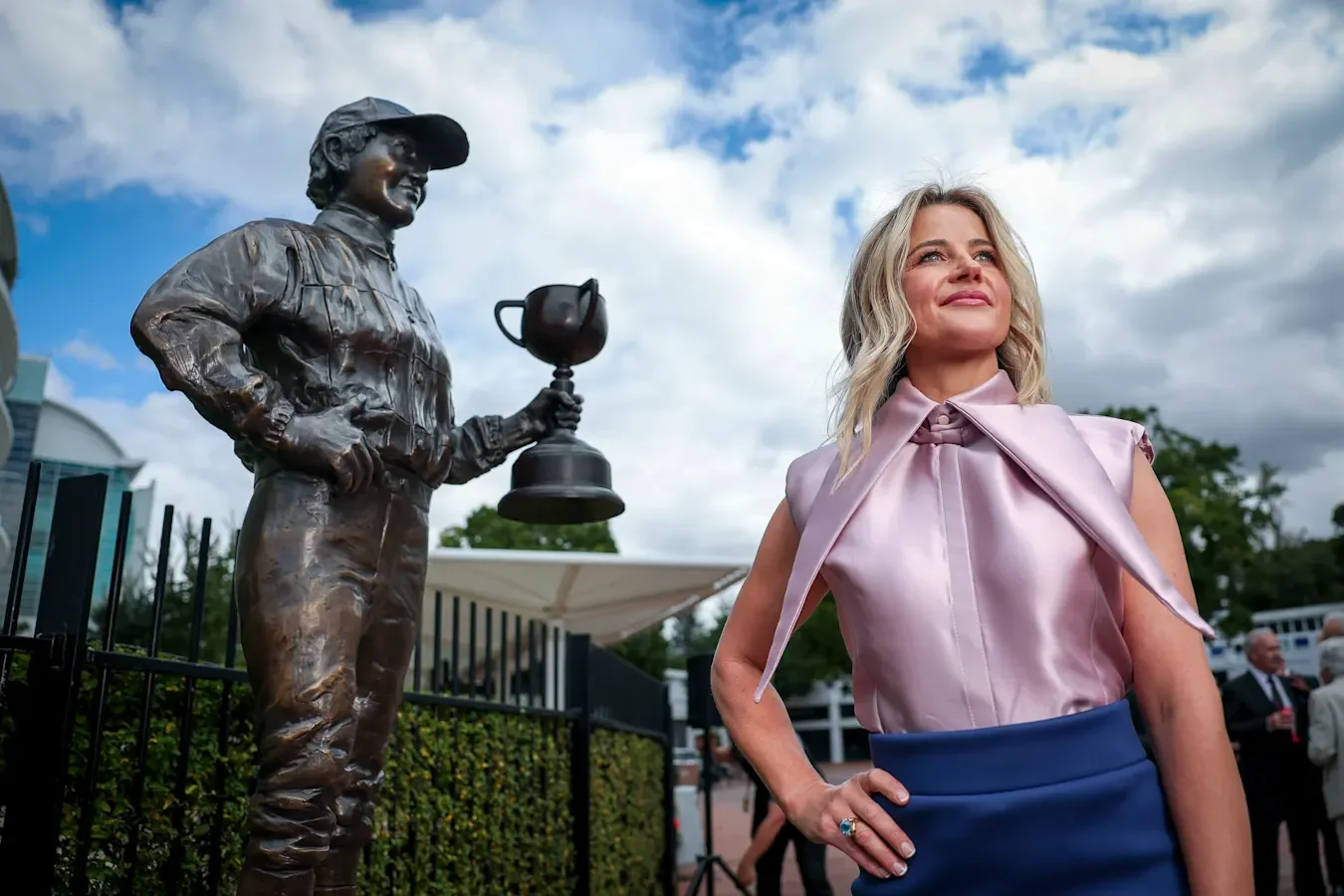
When the Victoria Racing Club unveiled Michelle Payne's bronze statue at Flemington, it got me thinking: are we actually doing enough to honour the women who've shaped this industry, or are we just good at the big headline moments? Michelle absolutely deserves to be immortalised alongside the other legends at headquarters. But I'm not convinced a statue here and there tells the full story of how we value the contribution of women in racing.
The Quiet Revolutionaries Behind the Scenes
While we're unveiling statues, there are women who've been quietly revolutionising this industry for decades without the fanfare. Take Katie Page-Harvey, who alongside her husband Gerry Harvey has co-owned Magic Millions for close to three decades. In 2012, she created the Magic Millions Racing Women initiative, now in its fourteenth year, which began with a $500,000 bonus on the Magic Millions 2YO Classic at the Gold Coast to be shared between the first four wholly female-owned horses home.
This initiative is not token gesture stuff. All-female-owned horses have won the race on five occasions. There have been 1,861 two-year-olds registered with 100% female ownership, and around half of bonus registrations each year are first-time owners. More than 80 stables across six states have all-female-owned horses in their care, and the 2YO Classic now carries $3 million in prize money. The initiative has since expanded with a 3YO Racing Women's Bonus introduced in 2020 and national achievement awards recognising women across the industry.
Success Stories That Prove the Point
The It's All About The Girls syndicate, founded by Elaine Lawlor and Anna Seitz, purchased the Star Witness filly Global Glamour through bloodstock agent James Bester for just $65,000 at the 2015 Magic Millions Gold Coast Yearling Sale. She amassed over $1.5 million with five wins, including two Group 1 events in the space of seven days: the Flight Stakes at Randwick and the Thousand Guineas at Caulfield in 2016. With 40 owners across seven countries, all women, she was trained by Gai Waterhouse and Adrian Bott before selling at the 2019 National Broodmare Sale for $1.55 million to a syndicate headed by Coolmore's Tom Magnier. That's roughly a 24-fold return on the original investment.
Global Glamour isn't alone either. Group 1 winners raced under the MMRW scheme include Foxplay, Sunlight, The Mission and Madame Pommery. These are serious horses winning serious races.
Recognition Where It's Due
At least some formal recognition is happening. Gai Waterhouse and syndicator Denise Martin were inducted into the Magic Millions Racing Women Hall of Fame. Lindy Maurice, founder and CEO of Thoroughbred Industry Careers, received the 2024 National Racing Woman of the Year Award. These are the people building pathways for the next generation.
But we're quick to celebrate the big moments and sometimes forget the everyday contributors. I think about Simone Montgomerie, the South Australian jockey who died at just 26 after a fall during the Darwin Cup meeting in August 2013. Her horse Riahgrand reacted to a pedestrian crossing near the finishing line, throwing her to the ground. The Northern Territory Chief Minister called her "a champion jockey at the top of her game and a pioneer of women in racing." Her father, Peter Montgomerie, who trained Melbourne Cup runner-up On A Jeune, later organised a 3,010-kilometre charity cycling ride from Simone's hometown of Streaky Bay to Darwin in her memory, raising funds for the National Jockeys Trust. These are the stories that need telling alongside the headline acts.
The Bigger Picture
So are we doing enough? I'm genuinely torn. Initiatives like the Magic Millions Racing Women scheme are creating real change with real money behind them. But I think we're still too focused on the big moments and not enough on the everyday grind. Michelle Payne's statue is brilliant and deserved, but I'd love to see more recognition for the Katie Page-Harveys of the world who are actually changing the industry structure. Page-Harvey herself was the first woman elected to the board of the National Rugby League in 2004, creator of the NRL's Women in League initiative, and a driving force behind women's participation across Australian sport.
Racing has always been driven by strong women: as owners, trainers, administrators, and yes, jockeys. I just think we could be a lot better at telling those stories before they become bronze statues. Because by then, you're celebrating history rather than shaping the future.